Minnesota Gov. Tim Walz wants legislators' emails to be public. But it's not up to him
Published in News & Features
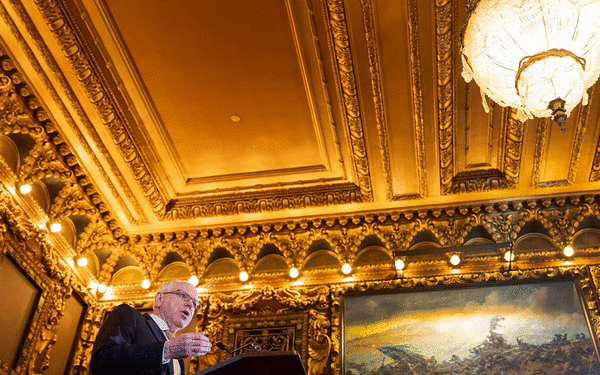
MINNEAPOLIS — As Gov. Tim Walz faces criticisms over his administration’s handling of Minnesota’s Medicaid fraud crisis, he’s coming back to a suggestion he’s made many times in his seven years as governor: Legislators’ emails should be open to the public.
“It seems absolutely outrageous,” Walz said in January about the fact that the state’s open records law, the Minnesota Government Data Practices Act, shields legislators’ records from public view.
Walz’s own emails are subject to disclosure, and he thinks legislators’ should be too in the name of transparency as both parties try to tackle the issue of fraud in social services programs this year.
A large majority of states subject legislators to their open records laws, according to the Reporters Committee for Freedom of the Press. Access to those records can provide insight into lawmakers’ deals and negotiations or interactions with lobbyists who may be attempting to influence their votes.
In Missouri, public records revealed the House speaker had threatened to fire a nonpartisan staffer who raised concerns about his attempt to hire an outside contractor to manage constituent information, according to local media. In Ohio, records revealed how the state’s House speaker pressured lawmakers to pass an energy law implicated in a major bribery scandal.
But getting Minnesota legislators to amend state law to open their emails to public scrutiny is easier said than done. Walz has made the push before, and his repeated suggestions at news conferences about fraud haven’t done much to persuade members of the Minnesota House and Senate.
There are no bills on the topic before the Legislature this year. And the idea lands with a thud when you ask lawmakers, no matter their party, who argue they have sensitive communications with constituents that must be protected.
“I don’t see that happening,” House Democratic-Farmer-Labor leader Zack Stephenson, of Coon Rapids, told the Minnesota Star Tribune.
“If something were to pass like that, it would have a lot of unintended consequences that probably would make it actually more difficult for members of the public to communicate with their elected officials,” he said.
State Sen. Warren Limmer, a Maple Grove Republican who sits on the Legislative Commission on Data Practices, struck a similar tone to Stephenson, saying in a statement that for legislators to effectively represent their communities, “constituents need to be able to talk freely with their legislators without worry that their messages will be made public.”
In arguing for the change, Walz has said it would allow people to see who lawmakers are communicating with who may influence their work.
“If we’re going to tackle fraud, if we’re going to tackle transparency, if we’re going to be in this together, this would be an opportunity for the public and the media to say, ‘Why are we one of the very few states that doesn’t allow data practices requests of legislators?’ ” Walz said. “That’s my PSA for the day.”
Resistance to the idea, however, is bipartisan and longstanding.
Senate Minority Leader Mark Johnson, an East Grand Forks Republican, said his caucus hasn’t historically supported the idea.
Senate Majority Leader Erin Murphy, a St. Paul Democrat, said while she supports legislators being subject to the same transparency as the governor and staff, “not enough of my colleagues feel the same way to enact a change.”
Minnesota House Speaker Lisa Demuth, a Cold Spring Republican who is running for governor, declined to comment through a spokesperson.
Matt Ehling, a board member of Minnesotans for Open Government, said in his 15 years working around the Capitol, he’s seen the occasional bill to subject legislators to the open records law. But he said they don’t get hearings.
He noted the public can access the emails of city council members in Minnesota, who also work closely with constituents.
Communication with constituents is exempt from public disclosure, Ehling said, but exchanges with lobbyists or companies that are seeking tax incentives or other benefits must be made public.
“Having that kind of information available at the legislative level would be just similarly important,” he said.
While Ehling agrees with Walz‘s push for more transparency, he said the administration has slow-walked requests for years. Ehling also serves on the board of Public Record Media, which sued the Walz administration for records concerning Minnesota’s response to unrest following the murder of George Floyd.
The administration, he said, has “not always been the most forthcoming with their own records.”
_____
©2026 The Minnesota Star Tribune. Visit startribune.com. Distributed by Tribune Content Agency, LLC






Comments