
The Greener View: Can You Kill Dandelions Without Herbicides?
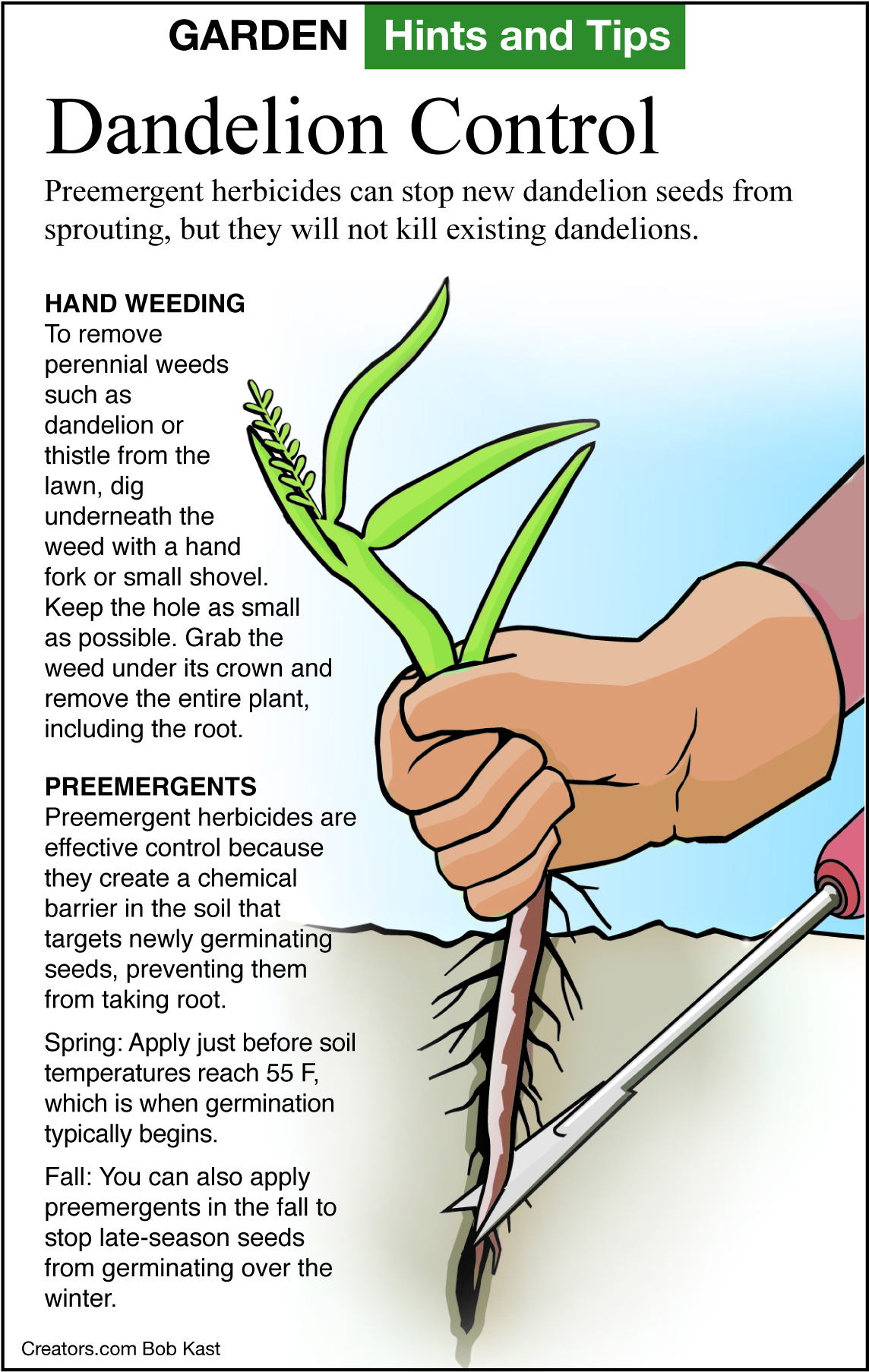
Q: I have four acres of lawn grass that has plenty of weeds. Is there a good way to kill dandelions without herbicides?
A: I am sorry to say there are no cost-effective, dandelion weed-killing products or techniques that aren't herbicides.
The following comments can be applied to just about any weed in the lawn or garden. First, keep the "good" plants healthy so they can compete with the weeds. Weeds often come into a lawn or garden when there is a breakdown in the care of the good plants. Proper watering, fertilizing, mulching, and insect and disease controls can reduce weed populations.
Second, all chemicals must be used according to label directions. Organic does not equal safe. Some organic products are just as harmful to people and pets as some synthetic products, and some synthetic products are as safe as some organic products.
Third, prevent weeds from spreading. Most weeds spread by seeds. Prevent them from flowering to stop more plants from growing in the future. Annual weeds die during the year they were born, so if you prevent them from flowering, you win. Stopping perennials such as dandelions from flowering gives you time to kill the plant later.
Speaking of seeds, preemergent weed prevention stops seeds from growing, so you don't get a flowering weed plant at all. Many spring-blooming dandelions actually started growing the previous fall. Using a preemergent in the fall and spring will stop annual and perennial weeds before they can become a problem. Several organic brands make preemergents with corn gluten. Preemergents applied regularly are as close to a cost-effective technique as we get with large areas, but they can still be expensive.
The best, most sure way of stopping weeds is pulling them out of the ground. This is easier said than done. Weed pulling, even with long-handled tools, is hard work and time consuming. This only works on small areas, with able-bodied people who have time on their hands.
A garden hoe is one type of long-handled weeding tool. Besides being hard work, the problem with a hoe is that any soil that is flipped up with the tool will bring weed seeds to the surface, where they will sprout. Weeding with a hoe can have the effect of promoting new weeds. They also damage the roots of good plants.
Flamethrower weeding tools sort of work. They use a lot of fuel. They obviously can't be used in certain parts of the world that seem to burst into flames at the drop of a hat. (I'm looking at you, California.) Anyone who has tried to keep a campfire going knows that green stuff doesn't burn well. Weeds are green, so they don't burn easily and often come back from the roots that were not touched by the heat. The heat can also damage the good plants growing nearby.
The same goes for boiling water. It may kill the top of a plant, but if there is a deep root system, the plant will be back in a few days. The hot water will also damage any good plant leaves or roots that it touches.
How about vinegar? Kitchen vinegar has about 5% acetic acid. It might kill the tops of some weeds, but again, any weed with a deep root system will probably come back. Acetic acid weed-killing products that are over 20% acetic acid are better, but safety requirements must be strictly adhered to. It can't tell the difference between good and bad plants, so you must keep it off lawn grasses and other garden plants.
How about sodium chloride? Table salt is an active ingredient in some organic weed-killing products. Again, it can't tell the difference between good and bad plants. Anyone who salts their sidewalks in the winter can tell you the damage salt does to lawns and flower beds next to the sidewalk.
How about clove, cinnamon or lemongrass oils? These are total plant-killing oils that kill any plants they come into contact with.
Weeds in flower beds can be controlled to some extent by mulch or weed barrier cloth material. Weed seeds do sprout on top of mulch and weed barriers, so there will be some weeds that need to be controlled.
There are people looking at dandelions to create a substitute organic rubber. Maybe someday you will be planting the neighboring farm fields with dandelions.
========
Email questions to Jeff Rugg at info@greenerview.com. To find out more about Jeff Rugg and read features by other Creators Syndicate writers and cartoonists, visit the Creators Syndicate website at www.creators.com.
Copyright 2026 Jeff Rugg. Distributed By Creators.





Comments