Commentary: Dark money is winning as political parties face an identity crisis
Published in Op Eds
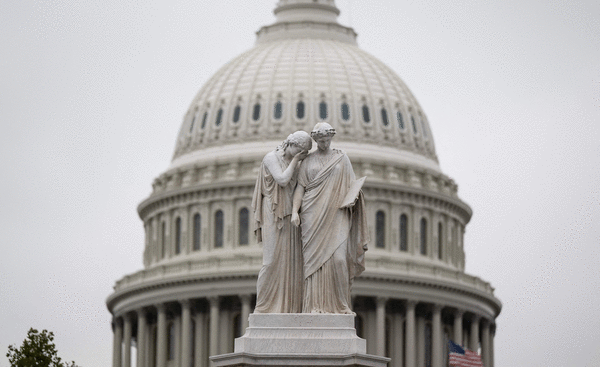
American political party organizations have imploded in the post-World War II era, largely replaced by dark money from unknown donors. The party vacuum is ominous for a healthy democracy, because voters are left without stable cues about how to vote. There are options that could — it won’t be easy — strengthen parties and diminish the impact of dark money.
The traditional political party has four roles: establish and promote a platform; recruit candidates to seek election on that platform; conduct campaigns to elect those preferred candidates; and, once elected, pursue the platform objectives inside government.
In his 1971 book “The Party’s Over,” prominent political writer David Broder declared that “the governmental system is not working because the political parties are not working.” In the half century since, parties have weakened further. For example, in my state, the formal Illinois Republican Party no longer fulfills any of the traditional party roles.
Parties have been declining over the decades as control of nominations to office — the most critical role of parties — has shifted from party leaders to party primaries. And now in California primaries, candidates of both major parties are on the same ballot. The California approach basically ignores the role of parties, and a party may end up without a candidate on the general election ballot.
This transition to more openness would appear to favor democracy, that is, power to the people — from the Greek “demos,” meaning “people,” and “kratia,” meaning “power.” The overall effect is the opposite, however, as most voters approach elections with at best modest knowledge of the issues and candidates. It has always been so, and thus the rationale for political parties — to provide clueless voters cues to help them in their voting decisions.
For most of the 20th century, the Democratic Party stood for the working class and the Republicans for business. Simple, but helpful to the voter. After all, the basic conflict in human history has been that between labor and capital. A voter unattached to either party could determine how things in society were going under the party in power and vote for the other party if he or she wasn’t happy with the economy.
Today, the Democratic Party message is garbled, at best, as different factions vie for leadership. The Republican Party, now a captive of President Donald Trump, has no clear message; it has a willful leader who suppresses party identification to that of himself.
As a result, according to a 2025 Gallup poll, almost half of American voters (45%) now identify with neither party.
Political party organizations, as well as voting in America, are typically broken down into precinct units of about 1,000 registered voters. Post-World War II, precinct posts were generally filled with local party activists, and there were frequent contests for committeeperson or captain.
Today, party officials have to plead, often unsuccessfully, with party identifiers to fill the roles. Citizens interested in politics more often give their loyalty to candidates or elected officials, who build their own candidate-centered, rather than party, organizations.
With party organizations unable or unwilling to mount campaigns on behalf of their preferred candidates, money has filled the vacuum. This money often comes into campaigns in big chunks from independent super political action committees that hide their donors’ names from disclosure. The money goes primarily for advertising, largely on social media, with messages that are more and more tailored to the individual voter.
As a result, voters are adrift in an echo chamber of babble. This confuses and distresses voters, many of whom tune out and stay away from the polls. Since democracy thrives on active citizen support and participation, our political system suffers. The confusion can induce some voters to support candidates who trumpet simple fixes to complex problems.
There are options that could reinvigorate parties and diminish the impact of money in politics:
Create a new political party or parties, just as Abraham Lincoln and associates created the new Republican Party in the early 1850s, supplanting the Whig Party. The two present major parties have never been more vulnerable to challenge.
I am surprised, for example, that former Republican U.S. Rep. Adam Kinzinger, a bitter opponent of Trump, has not transformed his Country First advocacy group into a political party. As Theodore Roosevelt said, the credit belongs to those who are in the arena.
Further, bring the light of day to dark money donors and make their money toxic. Cast megabucks in campaigns as the issue; oppose candidates who benefit from dark money. Voters are offended by big money that seeks to manipulate them.
The party is over.
Long live the party and transparency in elections.
____
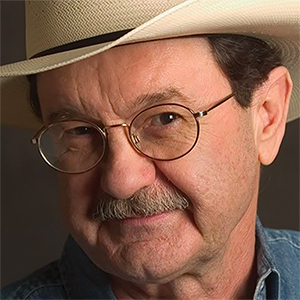
Jim Nowlan has participated in politics for six decades, from Republican precinct committeeman in Illinois and state legislator to statewide candidate and campaign manager for U.S. Senate and presidential candidates. He is the author of “Politics — The Starter Kit: How to Succeed in Politics and Government.”
___
©2026 Chicago Tribune. Visit at chicagotribune.com. Distributed by Tribune Content Agency, LLC.

































Comments