The Quiet Return of the Anklet
Published in Fashion Daily News
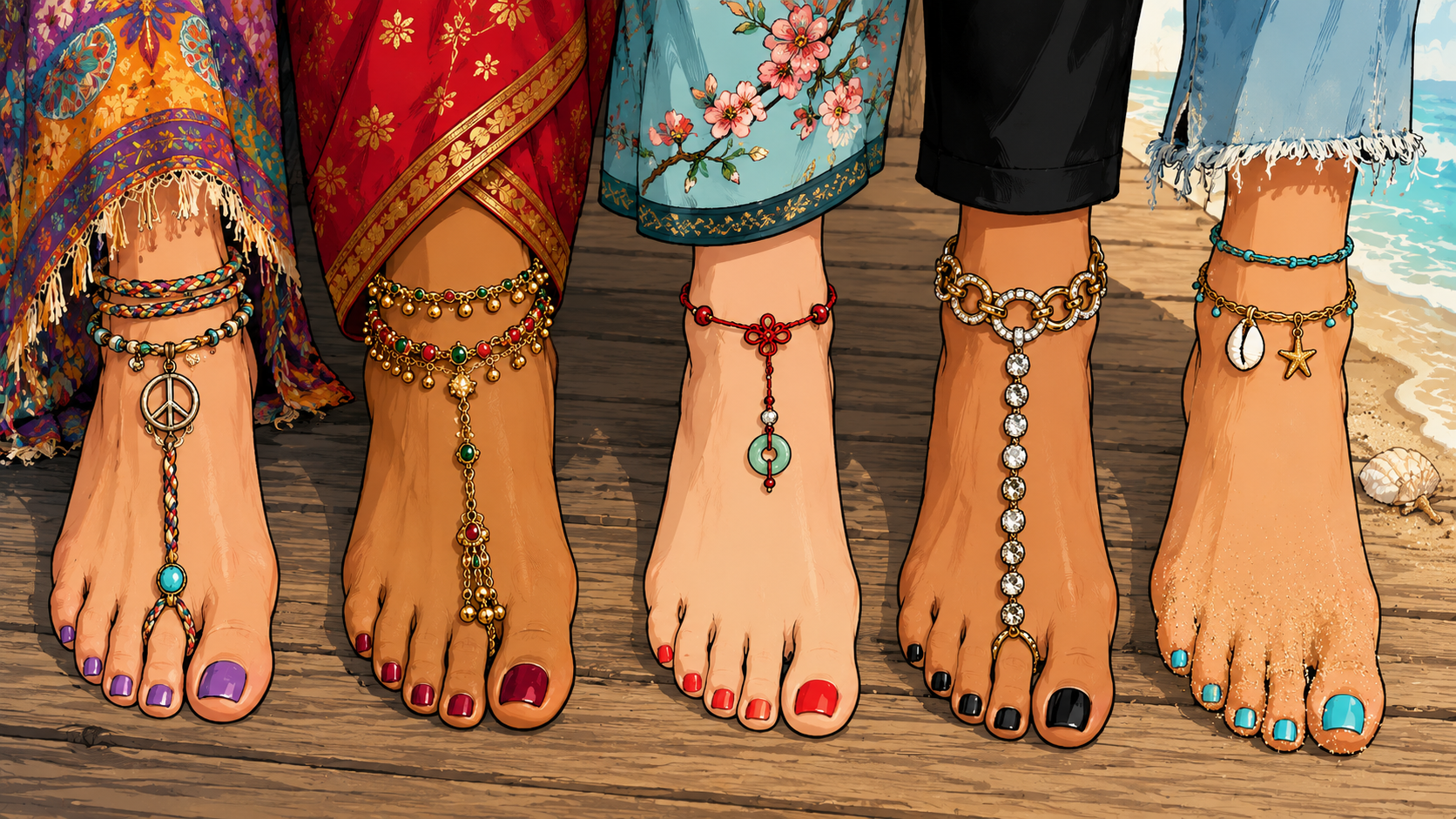
Fashion trends rarely disappear forever. They fade, rest, reappear unexpectedly, then return with entirely new meanings. Few accessories illustrate that cycle better than the anklet — a piece of jewelry that has shifted repeatedly between cultural tradition, beachwear, luxury fashion and deeply personal ornamentation.
Once associated almost exclusively with summer vacations and bohemian style, anklets have quietly evolved into one of the most adaptable forms of jewelry in modern fashion.
Today’s anklets range from nearly invisible silver chains to elaborate layered designs featuring charms, gemstones, shells, beads and sculptural metalwork. Some are playful. Others are formal enough for evening wear. Many sit somewhere in between.
And unlike necklaces or earrings, anklets often feel less performative and more intimate.
“They’re almost private jewelry,” said fashion historian Lena Corbett of Baltimore. “You may notice them immediately, or not at all. That subtlety is part of the appeal.”
From Ancient Tradition to Modern Fashion
Anklets have existed for thousands of years across multiple cultures. Archaeological evidence places ankle adornments in ancient Egypt, South Asia and the Middle East, where they carried meanings related to status, marriage, spirituality and wealth.
In India especially, anklets remain deeply rooted in tradition. Ornate silver designs, often worn in pairs, continue to hold ceremonial and cultural significance. Some include tiny bells that create soft musical sounds while walking.
Elsewhere, ankle jewelry evolved differently over time. In Western fashion, anklets became strongly associated with casual summer style during the 1970s, then resurged repeatedly through the 1990s and early 2000s.
Modern fashion has broadened the category significantly. Anklets now appear in minimalist luxury collections, alternative streetwear, artisan craft markets and high-end editorial styling alike.
The Rise of Minimalism
One of the most common contemporary styles is the thin chain anklet.
Usually crafted in silver, gold or stainless steel, these understated pieces are designed for constant wear. Many are so lightweight that wearers barely notice them after a few hours.
Minimalist anklets pair easily with sandals, sneakers, heels or bare feet, making them unusually versatile.
Some include tiny gemstones or single charms. Others rely entirely on texture and movement rather than decoration.
Jewelry designers say the popularity of minimalist anklets reflects a broader shift toward everyday jewelry that feels effortless rather than formal.
“People increasingly want pieces they can live in,” said jewelry designer Carla Dominguez. “Not something locked away for special occasions.”
Layering Changes Everything
While minimalist styles dominate some fashion circles, layered anklets have developed their own devoted following.
Mixing multiple chains of different widths and textures creates visual complexity without overwhelming an outfit. Beaded strands, braided cord, shells and metallic chains are often combined together.
Some styles lean heavily into beach aesthetics, while others incorporate gothic, industrial or vintage-inspired elements.
Layering also allows wearers to create deeply personal combinations.
A simple silver chain may sit beside a handmade bracelet from a vacation market or a faded woven strand tied years earlier by a friend.
Fashion psychologists say these combinations often function almost like wearable memory collections.
Texture, Motion and Sound
Unlike many forms of jewelry, anklets interact visibly with movement.
They shift while walking, catch sunlight differently throughout the day and occasionally produce soft sounds depending on the materials used.
Tiny charms tap against skin. Layered chains slide against each other. Beaded styles move rhythmically with each step.
Designers say this kinetic quality contributes significantly to the accessory’s emotional appeal.
“An anklet doesn’t just sit there,” Dominguez said. “It moves with the body constantly.”
The Beach Influence Never Really Left
Even as anklets became more sophisticated stylistically, they never entirely lost their association with coastal fashion and relaxed summer living.
Shell anklets, braided cord designs and turquoise beadwork remain especially popular in warm-weather regions and tourist towns.
California beach culture, in particular, helped cement the anklet as shorthand for ease, informality and outdoor living.
Many people still associate anklets with vacations, boardwalks, festivals and warm evenings outdoors.
That connection may explain part of their lasting emotional appeal.
“They remind people of freedom and leisure,” Corbett said. “That’s powerful imagery.”
Luxury Fashion Embraces the Anklet
In recent years, luxury designers have increasingly incorporated anklets into runway styling and jewelry collections.
Diamond anklets, sculptural cuffs and heavy gold chain styles now appear regularly in high-fashion campaigns.
Some designers intentionally contrast formal clothing with casual ankle jewelry to create visual tension.
Others use anklets to emphasize movement and asymmetry in minimalist outfits.
Fashion editors note that anklets photograph particularly well because they naturally draw attention downward, creating strong compositional lines in editorial imagery.
Comfort and Permanence
Unlike large necklaces or heavy earrings, anklets often feel unusually easy to wear long-term.
Many people leave them on continuously for weeks or months at a time.
That sense of permanence changes the relationship people develop with them. Jewelry that becomes part of daily life often acquires emotional meaning beyond aesthetics.
Some anklets become associated with relationships, travels, summers, milestones or personal identity.
Others simply become familiar — part of the wearer’s physical routine in subtle ways.
“They stop feeling like accessories after awhile,” Corbett said. “They start feeling like part of someone’s everyday self.”
A Small Accessory With Staying Power
Fashion trends continue shifting rapidly, but anklets have proven remarkably resilient across decades and styles.
Their adaptability may explain why.
They can be delicate or dramatic, formal or casual, nostalgic or modern. They can disappear beneath jeans or become the focal point of an outfit.
And while other jewelry categories often chase novelty aggressively, anklets tend to evolve more slowly and personally.
Perhaps that is why they endure: not because they dominate fashion, but because they quietly attach themselves to individual lives, routines and memories in ways larger trends rarely manage.
========
Maris Elloway is a lifestyle and fashion writer who focuses on jewelry, personal style and the emotional history of everyday adornment. She frequently writes about how small fashion choices shape identity and memory. This article was written, in part, utilizing AI tools.






Comments